
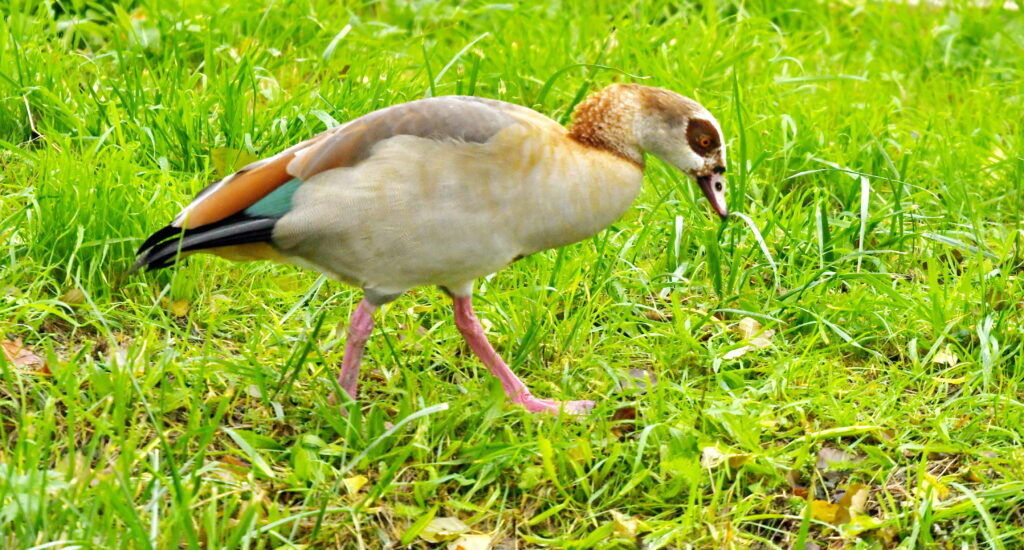
The Egyptian goose (Alopochen aegyptiaca) is a member of the duck, goose, and swan family Anatidae. It is native to Africa south of the Sahara and the Nile Valley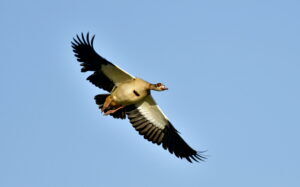
The sexes of this species are identical in plumage but the males average slightly larger. There is a fair amount of variation in plumage tone, with some birds greyer and others browner, but this is not sex- or age-related. A large part of the wings of mature birds is white, but in repose the white is hidden by the wing coverts. When it is aroused, either in alarm or aggression, the white begins to show. In flight or when the wings are fully spread in aggression, the white is conspicuous.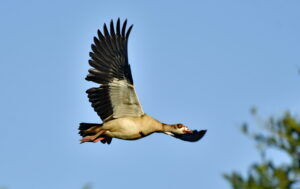
The voices and vocalisations of the sexes differ, the male having a hoarse, subdued duck-like quack which seldom sounds unless it is aroused. The male Egyptian goose attracts its mate with an elaborate, noisy courtship display that includes honking, neck stretching and feather displays. The female has a far noisier raucous quack that frequently sounds in aggression and almost incessantly at the slightest disturbance when tending her young.
Very rare bird in our area.
L’Ouette d’Égypte (Alopochen aegyptiaca) est une espèce d’oiseaux de la famille des anatidés. C’est la seule espèce du genre Alopochen à ne pas être éteinte. Elle appartient à la sous-famille des Tadorninae qui comprend notamment les tadornes.
Dans l’Égypte antique, cet oiseau était considéré comme sacré.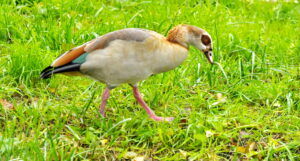
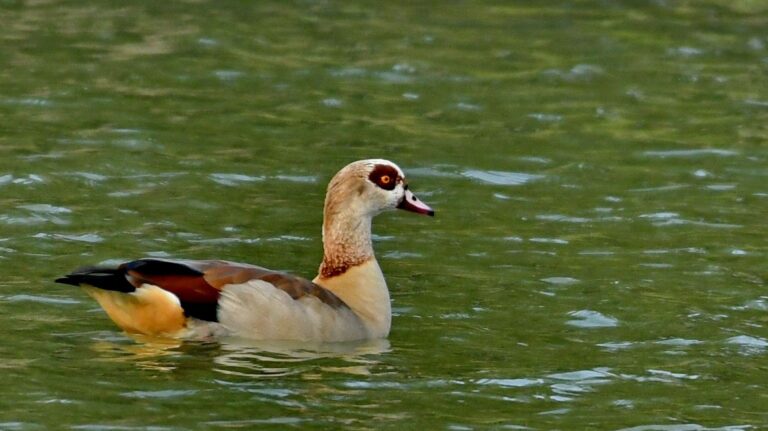
L’Ouette d’Égypte mesure entre 63 et 73 cm, le plumage est globalement brun roussâtre, la tête est plus claire avec une tache marron près de l’œil.
Il n’y a pas de dimorphisme sexuel bien que le mâle soit légèrement plus grand que la femelle.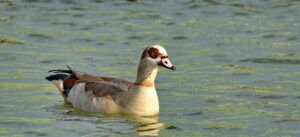
Il y a une grande variation dans la teinte du plumage, certains individus étant plus gris que bruns.
Tres rare oiseau dans Delta du Danube,.
Gasca de Nil (Alopochen aegyptiaca), după cum îi spune și numele, populează toată Valea Nilului, o vastă regiune din Africa subtropicala, la sud de Sahara. Preferă zonele cu lacuri, mlaștini și râuri, dar își petrece timpul și pe uscat.
Penajul masculului se aseamănă cu cel al femelei și este predominant gri, cu zone maronii-roșcâte, distribuția acestora variind de la o specie la altă. Aripile au pene maro, albe, negre și verzi. Capul este acoperit cu penaj gri, impestritat cu maro și crem, iar în jurul ochilor are câte o pată maro, caracteristică acestei specii. În zona gâtului și a bărbiei penajul este gri-deschis.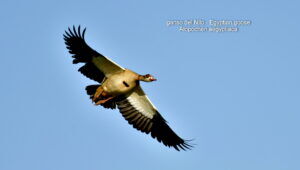
Ciocul este lat, aplatizat, cu vârful părțîi de sus tare, de formă unei unghii curbate în jos, de culoare roșu-portocaliu. Picioarele sunt de lungime medie, cu labele palmate, cu câte trei degete îndreptate în față și al patrulea mic orientat spre spate, toate prevăzute cu gheare mici și ascuțite. Picioarele sunt de culoare portocalie și îi servesc atât pentru a se mișcă în apă, cât și pe uscat, în mersul ei caracteristic legănat.