
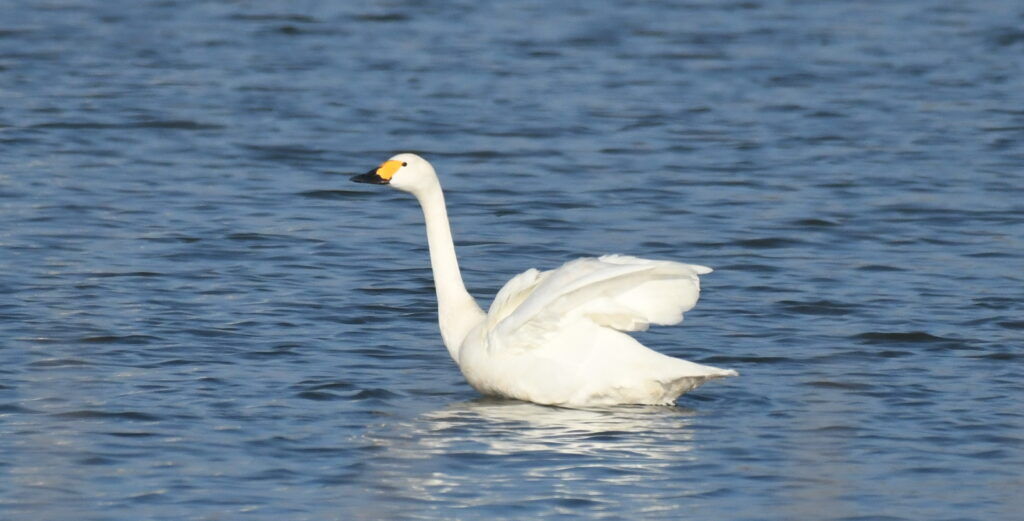
Lebada mica – Cygnus bewickii
Tundra swan – Cygnus bewickii
Tundrasvane (Danish)
Fluitzwaan (Dutch)
pikkujoutsen (Finnish),
Cygne siffleur / Cygne de Bewick (French)
Pfeifschwan (German)
Cigno minore (Italian)
łabędź mały (Polish)
cisne-pequeno (Portuguese)
Cisne chico (Spanish)
mindre sångsvan (Swedish)
and Alarch Bewick (Welsh).
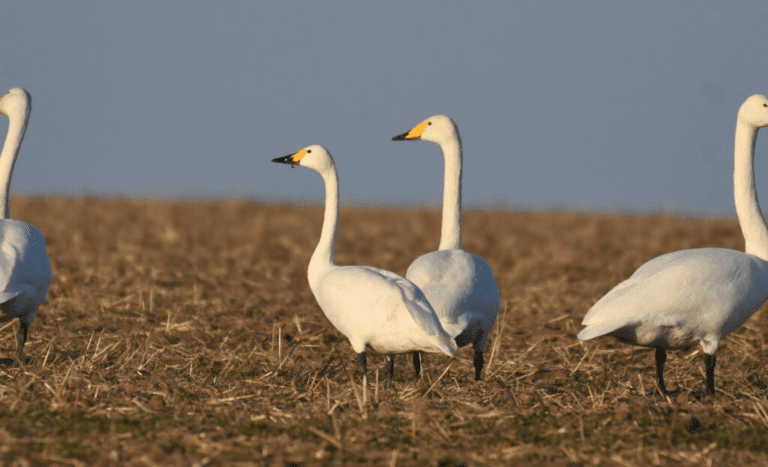
Facand comparatie cu celalalte specii de lebede, aceasta pasare este relativ mica, ea masurand 120 – 150 cm lungime si cantareste 4,5 – 9 kg. Penajul acesteia este alb pur, iar membrele negre. Se deosebeste de lebeda mica prin ciocul aproape in totalitate de culoare neagra, care are doar la baza o pata galbena.
Lebada mica traieste in regiunile Americii de Nord, in Alaska si Canada, iar iarna si-o petrece in zonele indepartate, in sudul SUA.
Subspecia bewickii a devenit intre timp specie de sine.In zona deltei gasim specia pe campurile cultivate cu grau si rapita de-a lungul Dunarii si mai ales in partea de sus si centru Dobrogei, , in jurul zonei Vadu, Mihai Viteazu, Istria…
There are over 360 bird species in the Danube Delta region—some common, others less well-known; some resident, others migratory. At various times of the year, they all grace this fantastic place known as the Danube Delta, in Romania.
I have photographed nearly every bird species in this area and featured them in five separate books. Now, through a series of posts, I aim to introduce each species to you, accompanied by the relevant details.
Placed by some in genus Olor with C. buccinator and C. cygnus. Subspecies bewickii has been regarded as a full species, but morphologically it is distinguished only by the yellow on the bill (which may, however, be variable) and possibly slightly smaller size. Population of NE Asia has been assigned a separate subspecies jankowskyi, though doubtfully valid. Two subspecies recognized.
Subspecies and Distribution
Tundra swan – Cygnus bewickii
C. c. bewickii (Yarrell, 1830) – Bewick’s Swan – Kola Peninsula E throughout Arctic N Siberia; winters in W Europe, S of Caspian Sea and E China, Korea and Japan.
C. c. columbianus (Ord, 1815) – Tundra Swan – tundra of Arctic North America, also extreme NE Siberia; winters in W and coastal E USA and N Mexico.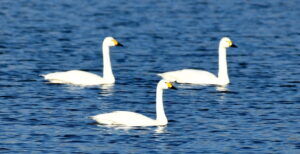
120–150 cm, male 3800–10,500 g, female 4100–9000 g (nominate); 115–140 cm, male 4536–8391 g, female 4300–7825 g (bewickii);…
Voice
Nominate is very vocal throughout the year, especially on water and in flight, with calls serving…
Habitat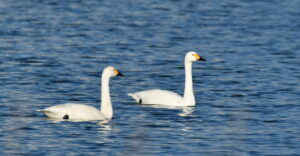
Breeds on shallow pools, lakes and rivers of moist Arctic tundra. On migration, in North Dakota
Food and feeding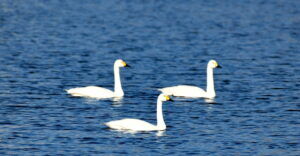
Mainly leaves, roots, rhizomes and stems of aquatic plants (Potamogeton, Zostera, Glyceria) and grasses.
Coomon bird in winter in Dobrogea.