
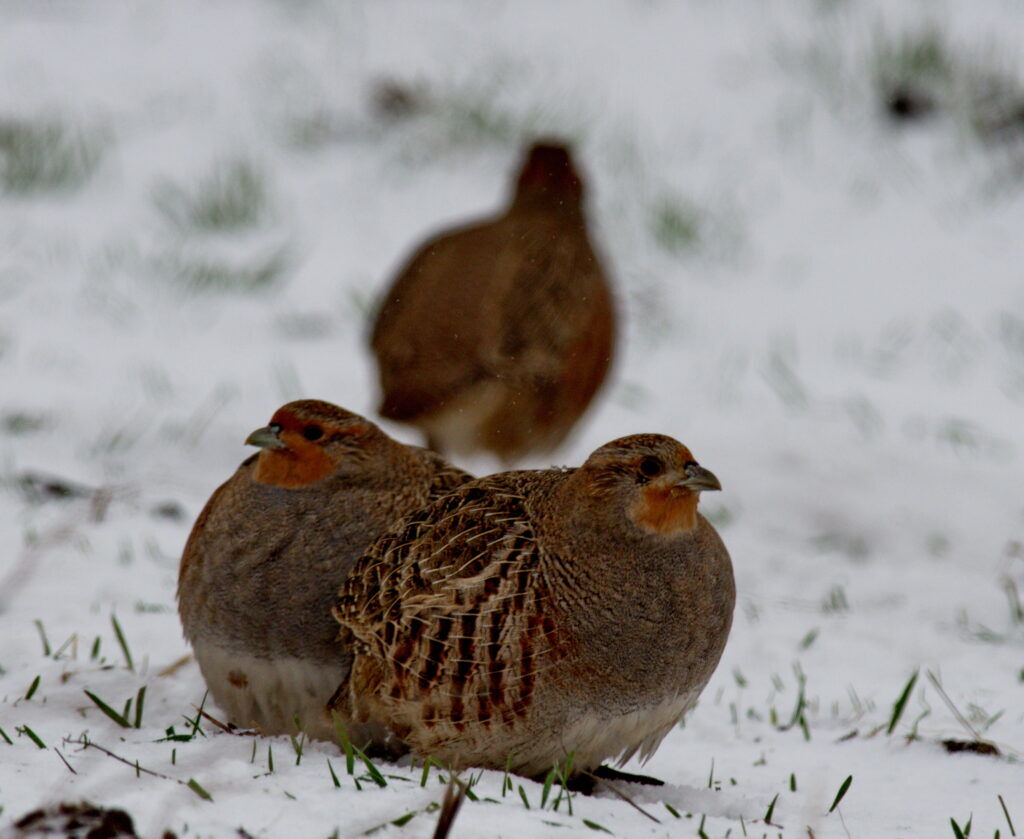
Potârnichea cenusie (Perdix perdix) face parte din ordinul Galliformes,familia Phasianidae. Denumita simplu potârniche. Ca si regionalisme i se mai spune paturnica, irbita, chirhica, tarhita sau în unele zone din Ardeal fugau sau fugle. Oare cât se cunoaste despre viata acestei pasari?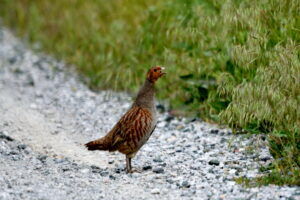
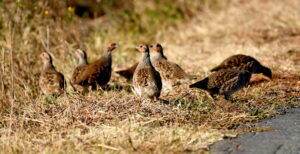
La originile sale,potârnichea era o pasare de stepa obisnuita cu o vegetatie deasa si ierboasa si cu tufarisuri marunte,adaptata fiind apoi câmpurilor si dealurilor cultivate presarate cu huceaguri, tufe ,haturi ierboase si chiar subarborete scunde, devenit între timp biotopul preferat. Presiunea antropica a fost aceea care a împins populatiile de potârnichi în zone mai putin prielnice. Se semnaleaza prezenta sa mai rara pâna la marginea golului alpin.
Specie comuna , in special pe partea de uscat a deltei.
The Grey Partridge (Perdix perdix) also known as the English Partridge, Hungarian Partridge, or Hun, is a gamebird in the pheasant family Phasianidae of the order Galliformes, gallinaceous birds. The species has been successfully introduced to many parts of the world for shooting, including vast areas of North America, where it is most commonly known as Hungarian partridge, or just “Hun”.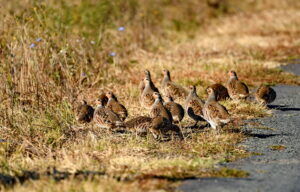 Widespread and common throughout its large range, the Grey Partridge is evaluated as Least Concern on the IUCN Red List of Threatened Species.
This partridge breeds on farmland across most of Europe into western Asia, and has been introduced widely into North America. They are quite common in some areas of southern Canada and the northern United States.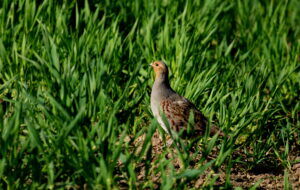
The belly is white, usually marked with a large chestnut-brown horse-shoe mark in males, and also in many females. Hens lay up to twenty eggs in a ground nest. The nest is usually in the margin of a cereal field, most commonly Winter wheat. The only major and constant difference between the sexes is the so-called cross of Lorraine on the tertiary coverts of females – these being marked with two transverse bars, as opposed to the one in males.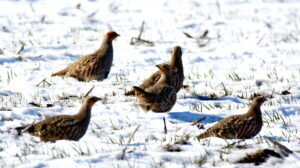
La Perdrix grise (Perdix perdix) est une espèce d’oiseau gallinacé, appartenant à la famille des Phasianidae, de l’ordre des Galliformes.
Elle est considérée comme chassable (gibier) dans certains pays, mais a depuis une cinquantaine d’années fortement régressé, et même disparu d’une partie importante de son aire naturelle de répartition.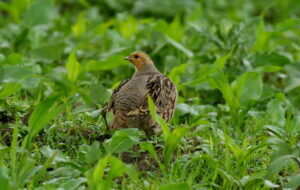
Cette perdrix est essentiellement aujourd’hui trouvée sur des milieux ouverts, le plus souvent des terres agricoles d’Europe de l’ouest et d’Asie. Elle était autrefois largement présente en Amérique du Nord et est encore commune dans certaines régions du sud du Canada et du nord des États-Unis. Les femelles peuvent pondre jusqu’à vingt œufs dans un nid construit au sol, souvent en marge d’un champ de céréales, et plus communément blé d’hiver en Amérique du Nord.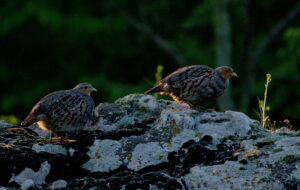
Comme beaucoup d’espèces appartenant à cette famille, c’est un oiseau non migrateur (sédentaire) terrestre, qui vit en petites bandes, sauf en saison de reproduction. Elle peut effectuer de petites migrations locales pour fuir une météorologie difficile avant de regagner son habitat.